Research by Dr Kristy Goodwin
Gender Capacity
Gap Survey
Help me map what the load is costing women, and what's helping them stay Powered-Up, before it costs us the next generation of female leaders.
An anonymous survey for women working in Australian organisations. It takes 12 minutes, and for every completed response $1 goes to an Australian women's charity. You can also choose to enter the draw to win a 90-minute performance coaching session with me.
TAKE THE SURVEY
Who this survey is for
This survey is for every woman working in an Australian organisation, from emerging leaders through to the executive team, across corporate and government, in every sector, and whether or not you have caring responsibilities outside work. You don't need to feel depleted to take part. Responses from women who feel Powered-Up matter as much as responses from women running on empty, because the gap only becomes visible when both are in the data.
What I keep hearing after I leave the stage
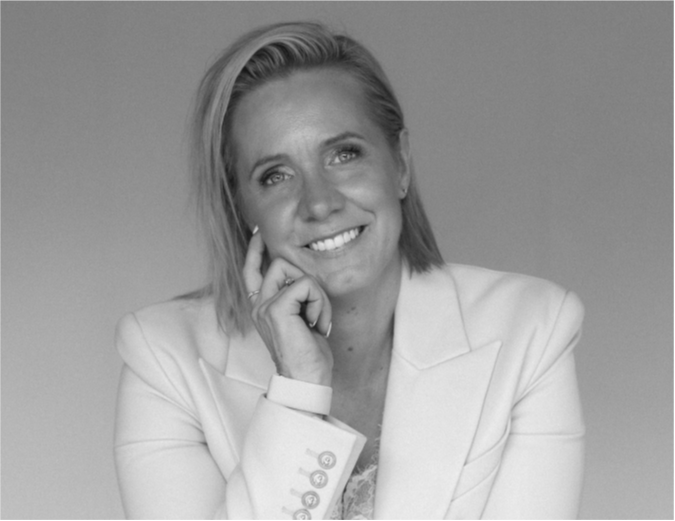
After one of my keynotes, a woman messaged me about the “Success Tax” that I spoke of on-stage, the price high-performers pay when they sacrifice their health, their relationships or their sense of self in pursuit of success. She said it was something she should have paid far more attention to in her forties, and that back then nobody was even talking about it. I've heard versions of that message ever since, in boardrooms and conference halls, and just as often at the local café and school pick-up.
I’ve heard countless anecdotes from accomplished and ambitious women who look like they’re crushing it on the outside, but inside they are crumbling and cracking.
They come from women running divisions, closing deals and carrying whole teams through change, and most of them describe the cost as something they should have managed better themselves. I read it differently, and so does the biometric data from the leaders I work with. What I see is a system extracting more capacity from women than it puts back, and women absorbing the difference quietly, often for years.
I call this the Gender Capacity Gap, and this survey is how I intend to measure it, with Australian data. I'm no longer willing to whisper about this. I want to collect the data to share how profound this issue is so that we can find solutions.
TAKE THE SURVEYThe Gender Capacity Gap
Men face stress, exhaustion and burnout too. Women also carry a set of compounding demands that men experience to a lesser extent, or not at all.
Women still carry a larger share of the invisible cognitive and emotional labour inside and outside of work. At work, many pay a care tax as the emotional kin-keeper of their teams, and right now that includes absorbing colleagues' anxiety about what AI means for their jobs. At home, the load now comes with a digital burden of its own, from the family group chat organising Grandma's 80th birthday gift to the fifteen emails from school. Women are still disproportionately carrying a higher caring and domestic load for both children and ageing parents or family members. Hormonal shifts across the lifespan change how the female stress system responds, and most workplaces were designed without accounting for any of it.
Every one of those demands draws on the same Biological Bandwidth, the focus, executive function and recovery capacity your Human Operating System (hOS) runs on. When demand consistently outpaces recovery, capacity falls. That fall is measurable, and it is not evenly distributed. And women are paying the price.
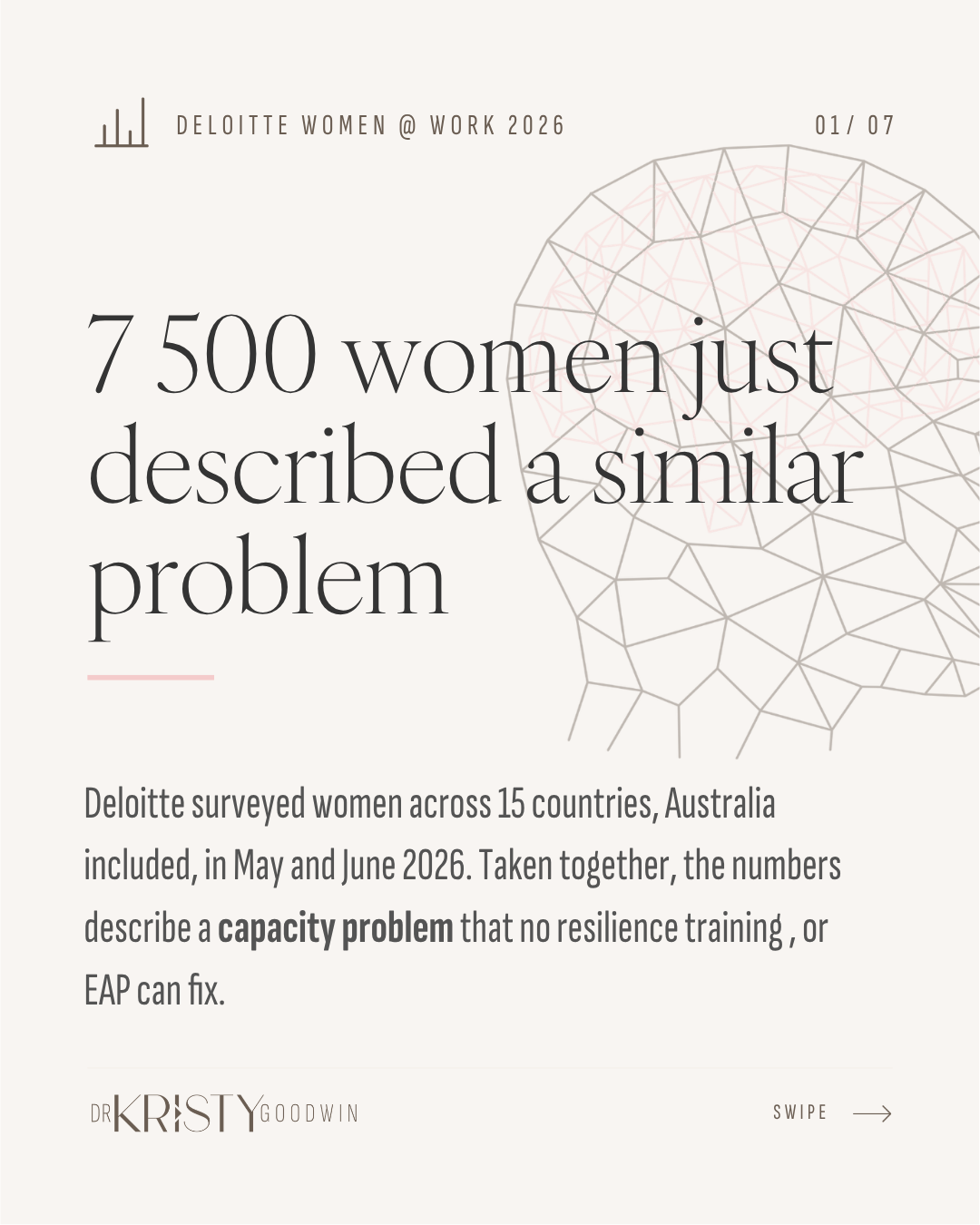
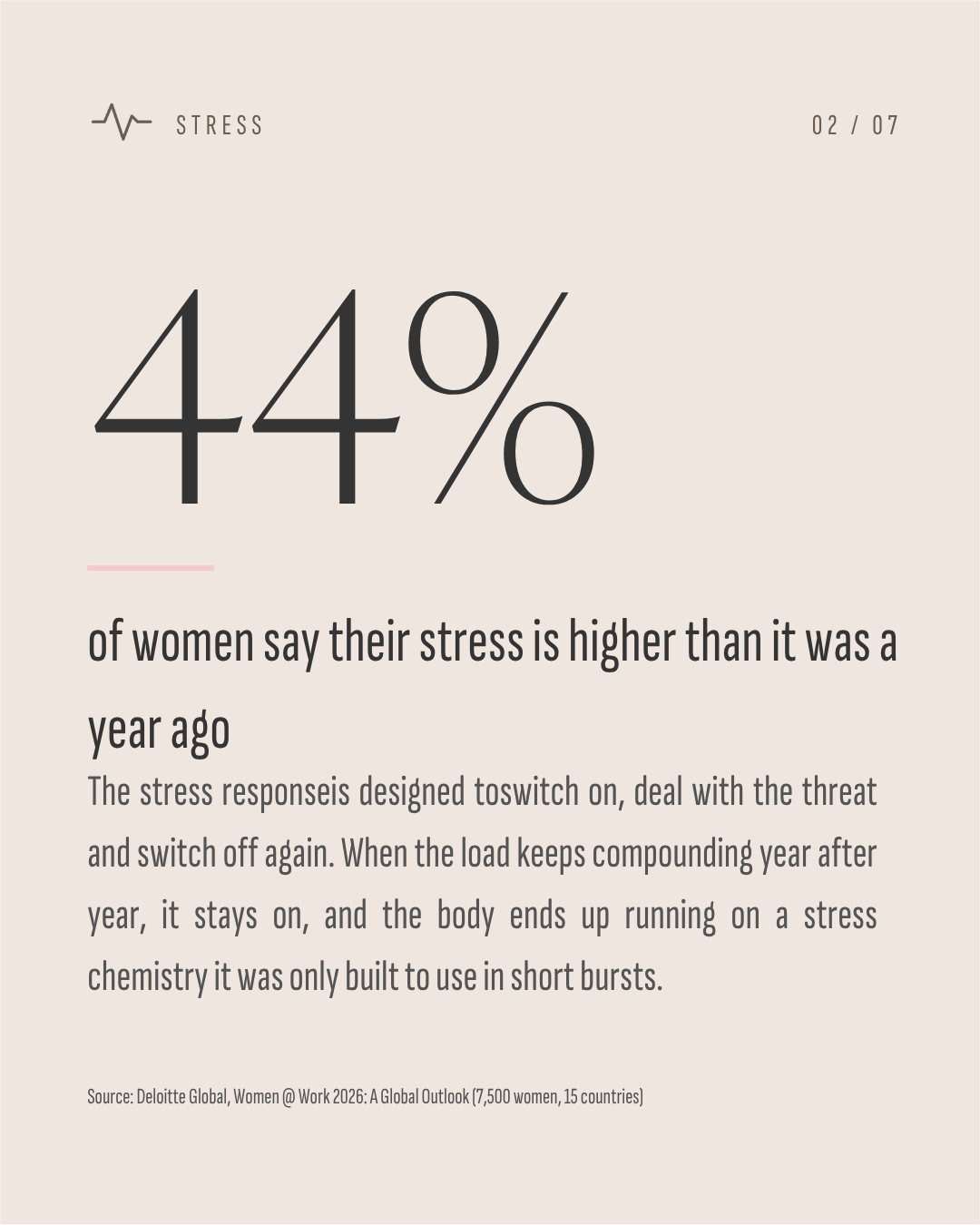
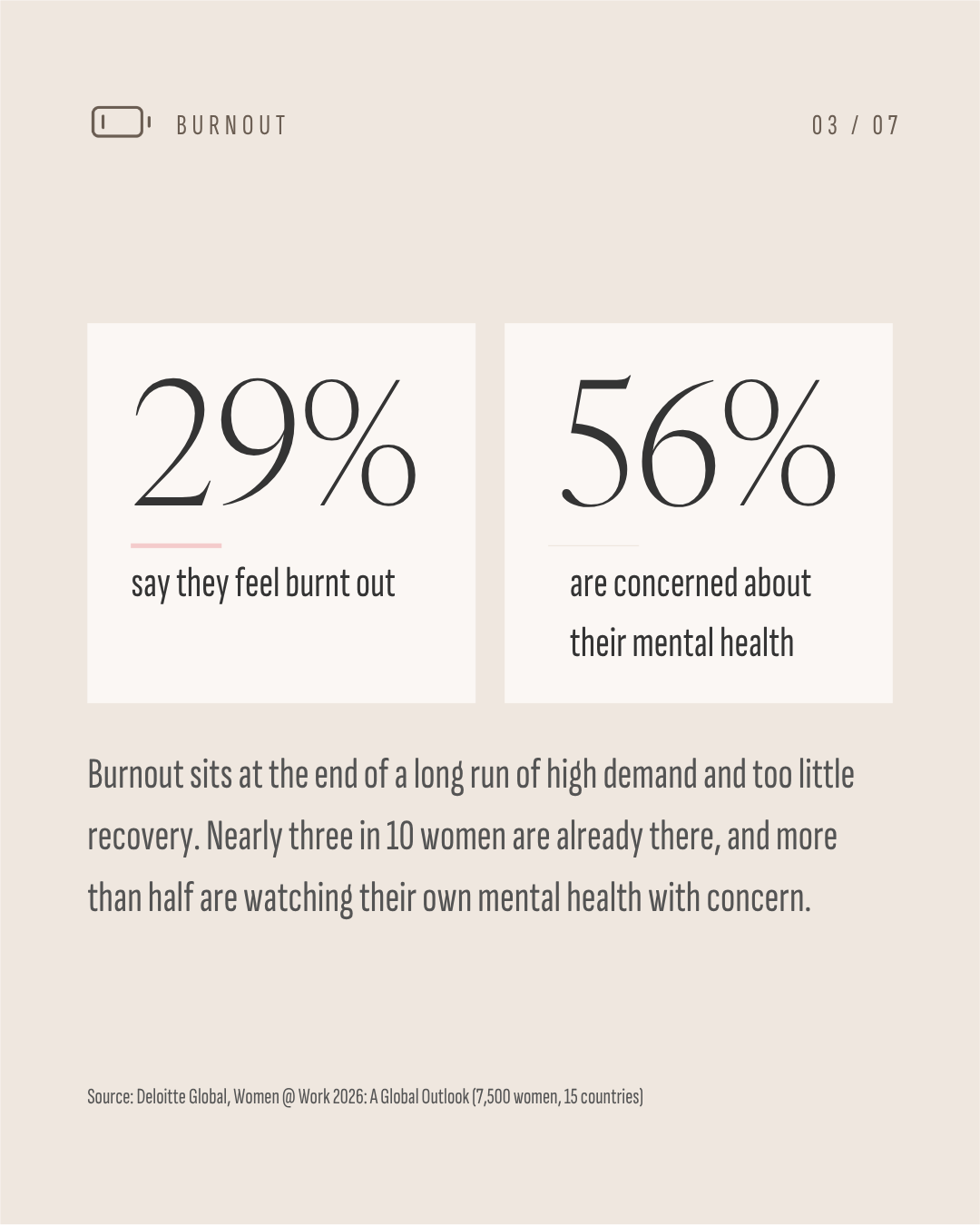
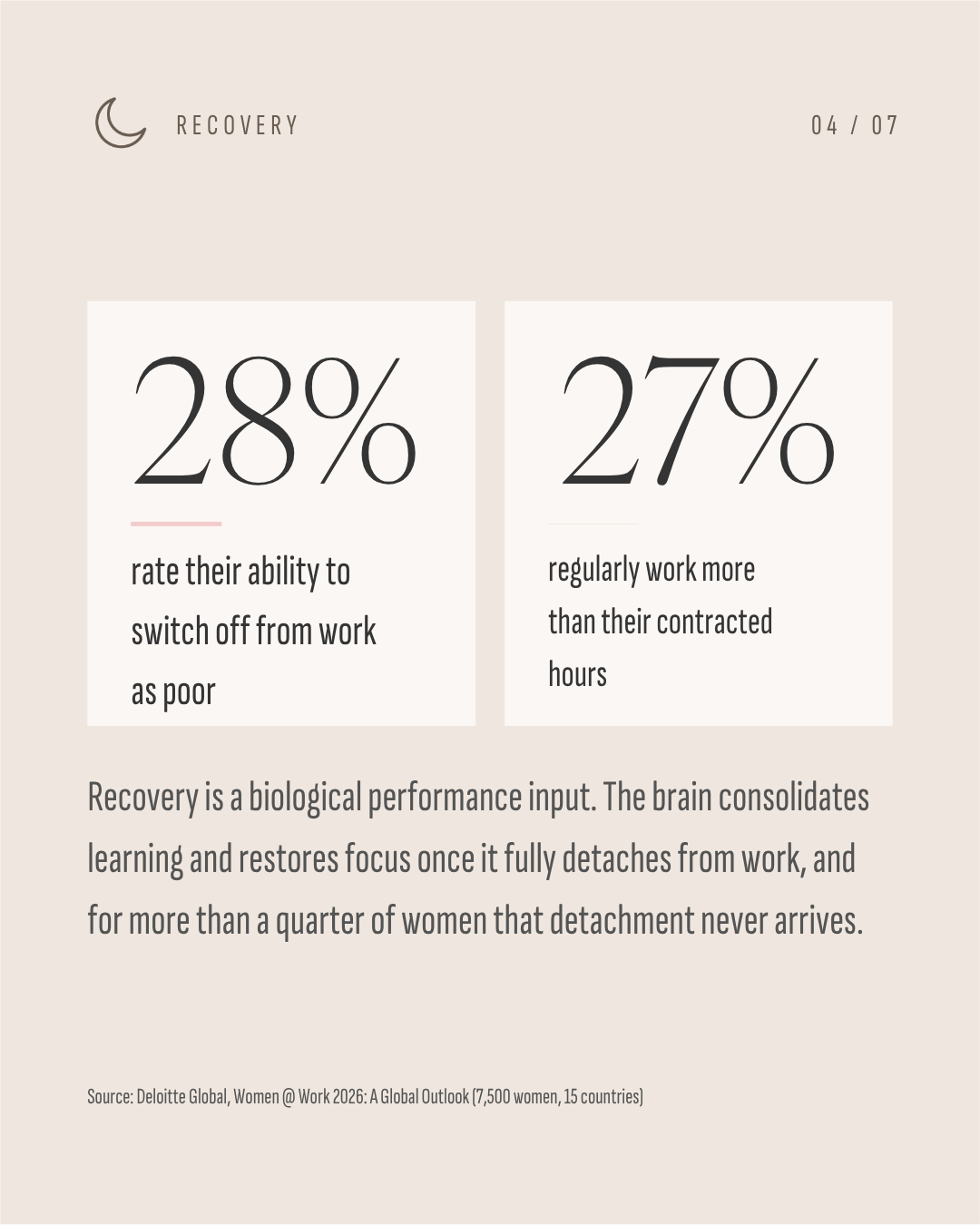
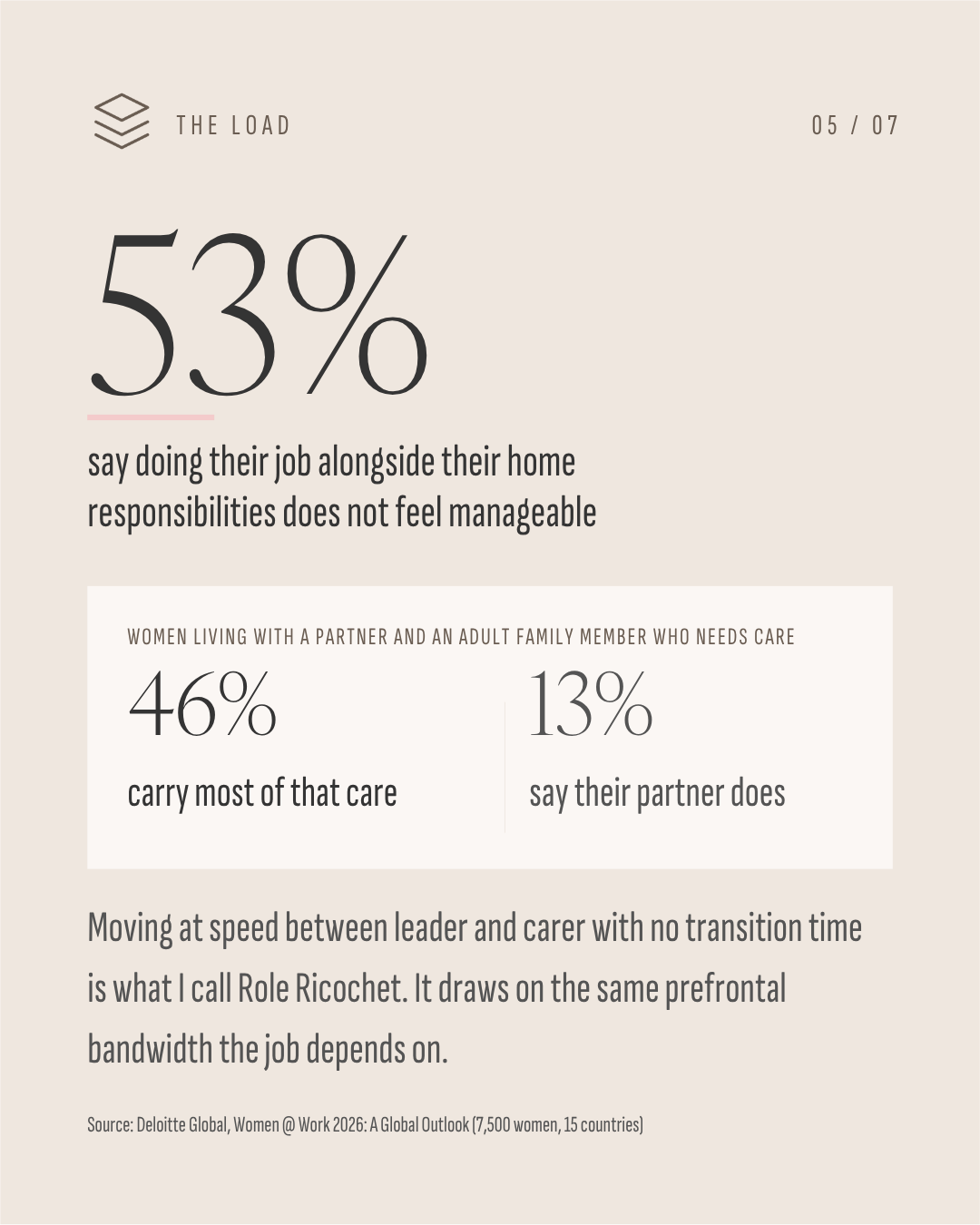
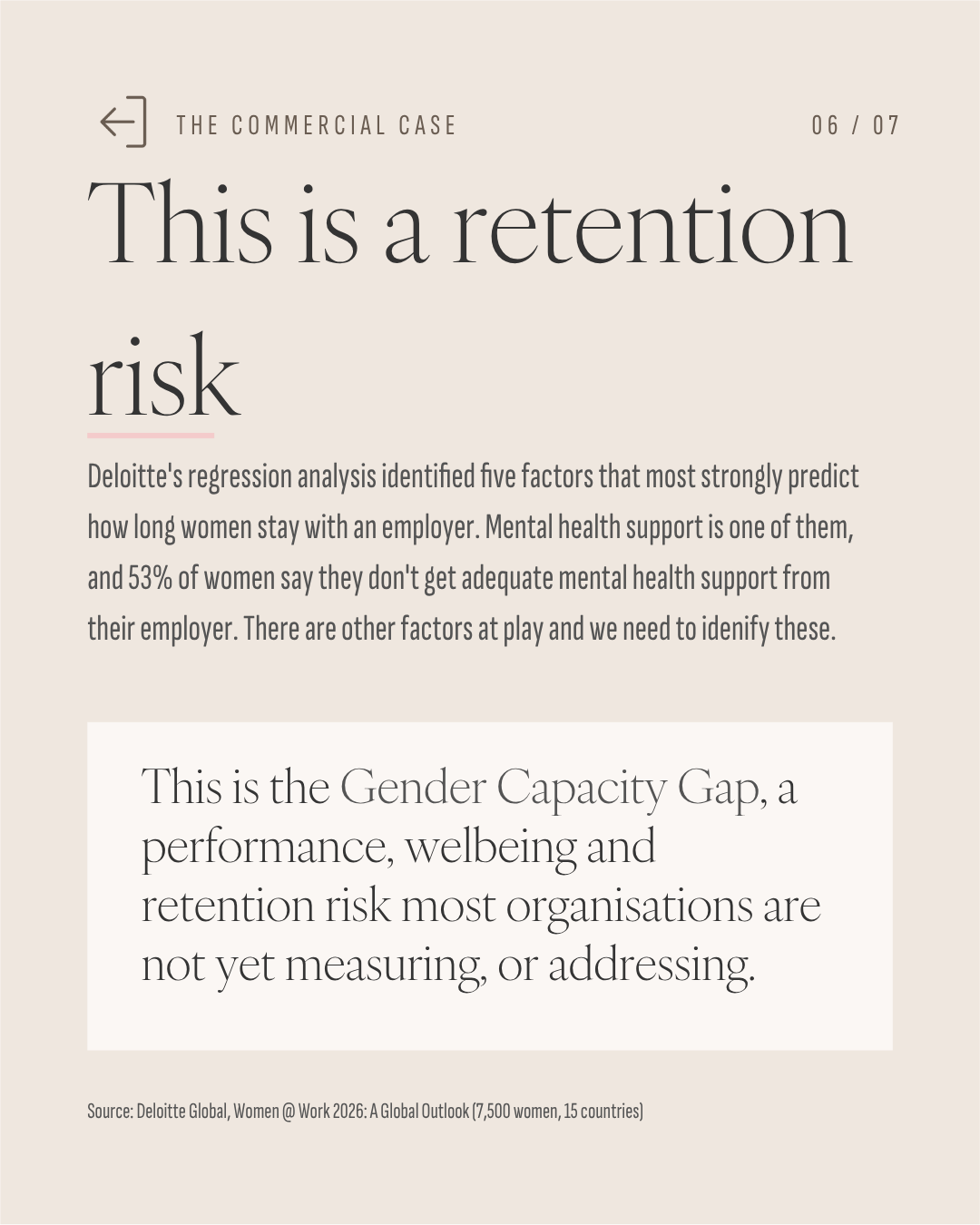
The global numbers already point in one direction. McKinsey and LeanIn.Org's Women in the Workplace 2025 report, which surveyed more than 9,500 employees across 124 organisations, found 60% of senior-level women frequently experience burnout, against 50% of senior-level men. McKinsey Health Institute research across 30 countries and more than 30,000 employees puts exhaustion at 46% for women and 38% for men. And Deloitte's Women @ Work 2026 report, which surveyed 7,500 women across 15 countries, found:
44% of women say their stress is higher than a year ago, 29% feel burned out, 28% rate their ability to switch off from work as poor, 27% regularly work beyond their contracted hours, and 53% say doing their job alongside their home responsibilities does not feel manageable.
The Leadership Leak
When capacity stays depleted and the system doesn't change around it, women rarely resign outright. They decline the stretch assignment, stop putting their hand up for promotion, reduce their hours or step sideways instead of up. In the same McKinsey and LeanIn.Org data, 21% of senior women say more senior leaders look burned out or unhappy, nearly double the share of senior men. None of it arrives as a resignation letter. It shows up eighteen months later as a leadership shortlist with no women on it, and by then the organisation has already paid the cost.
TAKE THE SURVEY
“
It's not a performance gap. It's a capacity gap. And left unaddressed, it becomes a Leadership Leak.
This is personal before it's organisational
The Leadership Leak is how a board will see this problem. You feel it somewhere else entirely. It's the 3am wake-up with tomorrow's meeting and next week's school form running through your head at once, or the 3pm slump where the focus you used to rely on won't come back, or the quiet realisation that you haven't been to the GP, the gym or a friend's place in months because something else always came first.
And some of you are finding your way through it. You've drawn a boundary that held, protected the hours when you do your best thinking, or had the conversation with a manager that changed what was asked of you. Those wins matter as much as the struggles, because they show what becomes possible when capacity is protected.
I want to hear both. This survey asks what the load is costing you personally, where you're paying the Success Tax and where you've found a way to stay Powered-Up, and none of it needs to be framed as a complaint about your employer. Most women carry this privately, assuming everyone else is coping better. Your answers, alongside thousands of others, are how that private experience becomes something we can see, name and change.

Why Australia
needs its own data
Almost every figure on this page comes from North American or global research. This survey is designed to give an Australian and New Zealand picture that sits alongside that international data. It asks where women's capacity is going and when depletion starts shaping career decisions, which is the evidence leaders need to take this to a board and have it treated as a workforce risk.

What to expect
The survey takes around 12 minutes and is completely anonymous. You'll be asked about your energy, focus, stress, sleep and recovery across a typical working week, the load you carry inside and outside work, and whether any of it has shaped the decisions you've made about your career. If you choose to enter the draw or receive the findings, your email is collected separately and never linked to your answers.
Every response gives back
For every completed survey, $1 is donated to [charity name]. The data you share builds the evidence base, and your time supports Australian women.

Where the findings go
The results will form the basis of a white paper on the Gender Capacity Gap in Australian organisations, released at the end of 2026, and will inform the book I'm writing on this problem. You can leave your email at the end and I'll send you the findings when they're published.

About the
research lead
Dr Kristy Goodwin is a neuro-performance scientist, keynote speaker, executive coach and author. She has delivered more than 1,500 presentations to organisations including Apple, Deloitte, EY, Qantas and CommBank. She is a Certified Speaking Professional and the 2023 Breakthrough Speaker of the Year, and her book Dear Digital, We Need to Talk won Australian Business Book of the Year in the Technology category. Her work combines neuroscience, technology research and wearable biometric data to help high-performers sustain their best work without paying the Success Tax.
For organisations
If your organisation is ready to look at the Gender Capacity Gap inside its own leadership pipeline, the Powered-Up Women keynote brings this research to your leaders and your people. Let's explore what that could look like in your organisation.
Add your experience to the picture
Anonymous · 12 minutes · $1 to an Australian women's charity for every completed response,
plus the chance to win a 90-minute performance coaching session with Dr Kristy Goodwin.
Sources:
- McKinsey & Company and LeanIn.Org, Women in the Workplace 2025 (sample size and 21% figure via Business Insider coverage)
- McKinsey Health Institute exhaustion data, 46% vs 38%
- Deloitte Global, Women @ Work 2026: A Global Outlook